Quebec winters are long, and heating bills can weigh heavily. More and more owners and building managers are looking for sustainable, cost-effective alternatives to oil or a conventional heat pump. Geothermal heating now stands out as a solution of choice, for single-family homes as much as for commercial and institutional buildings.
What is geothermal heating?
Energy drawn from the ground
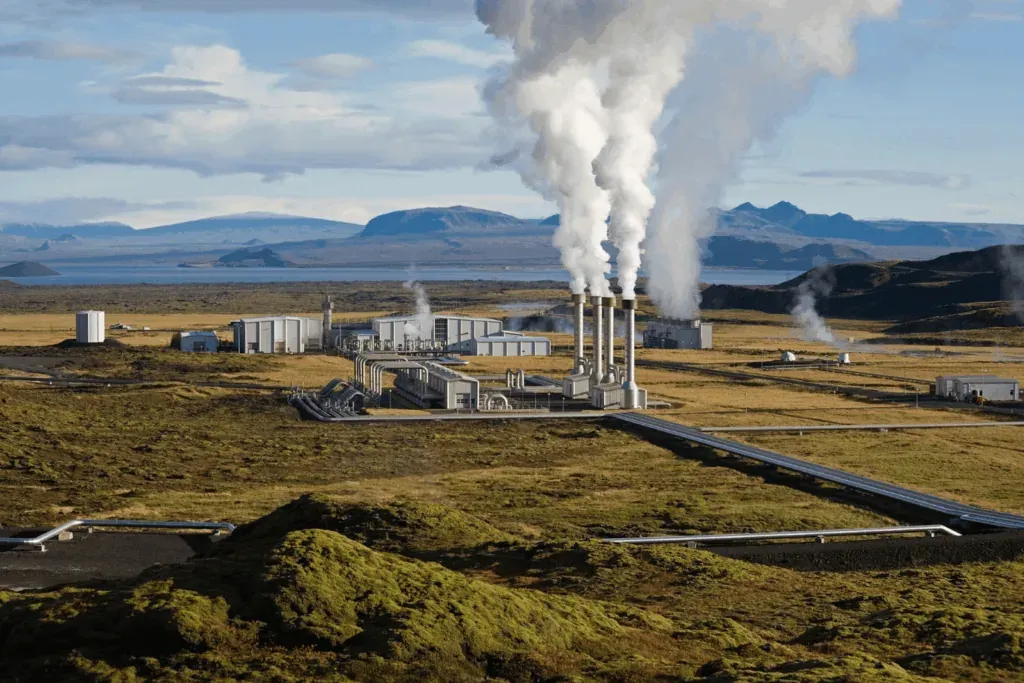
Geothermal energy means using the heat naturally present in the ground to heat a building. Contrary to what many people assume, this heat has nothing to do with volcanoes or hot springs. It comes from solar energy that builds up in the upper layers of the earth season after season.
Just a few metres down, ground temperature stays relatively stable all year long, generally between 7 °C and 12 °C in Quebec. That thermal stability is precisely what makes geothermal energy so attractive as a heating source.
A geothermal system captures this underground heat and transfers it inside the building through a heat pump. In summer, the process can be reversed to cool interior spaces, which makes it a genuinely versatile four-season system.
Geothermal energy versus other heating systems
Comparing geothermal energy with more traditional heating systems helps clarify where it fits. Natural gas and oil heating rely on burning fossil resources, which generates greenhouse gas emissions and leaves owners exposed to swings in energy prices.
Air-source heat pumps, popular as they are, lose a great deal of efficiency once outdoor temperatures drop below -15 °C, which happens regularly in Quebec. A geothermal system draws on the ground, where the temperature holds steady, so its performance stays constant even in deep cold. That is one of its major strengths in our climate.
How does a geothermal heating system work?
The principle in brief: from ground heat to your building
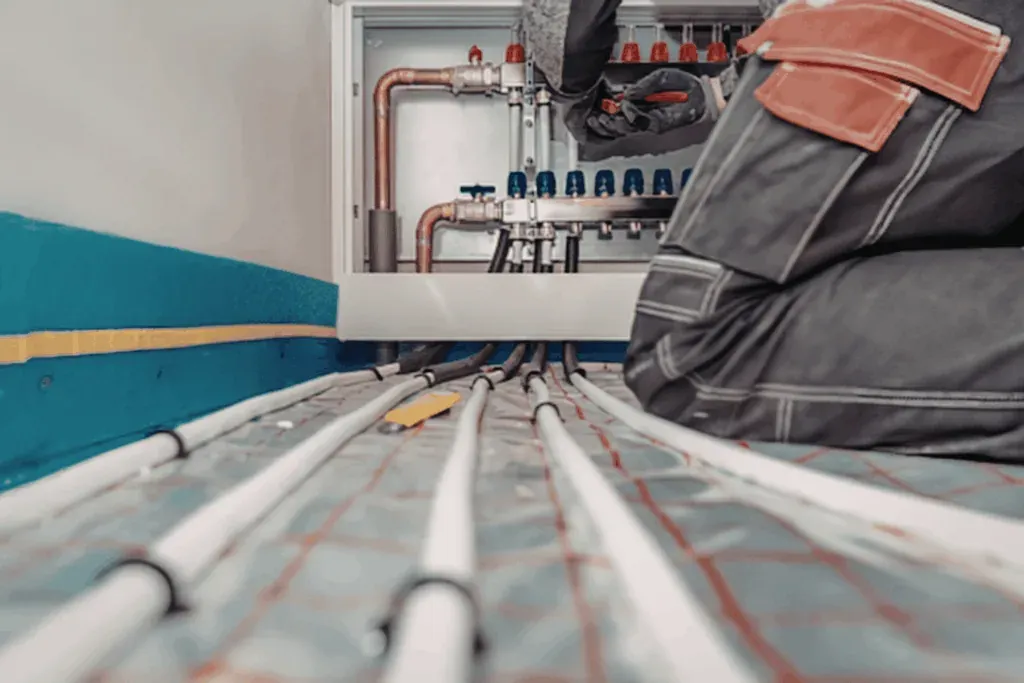
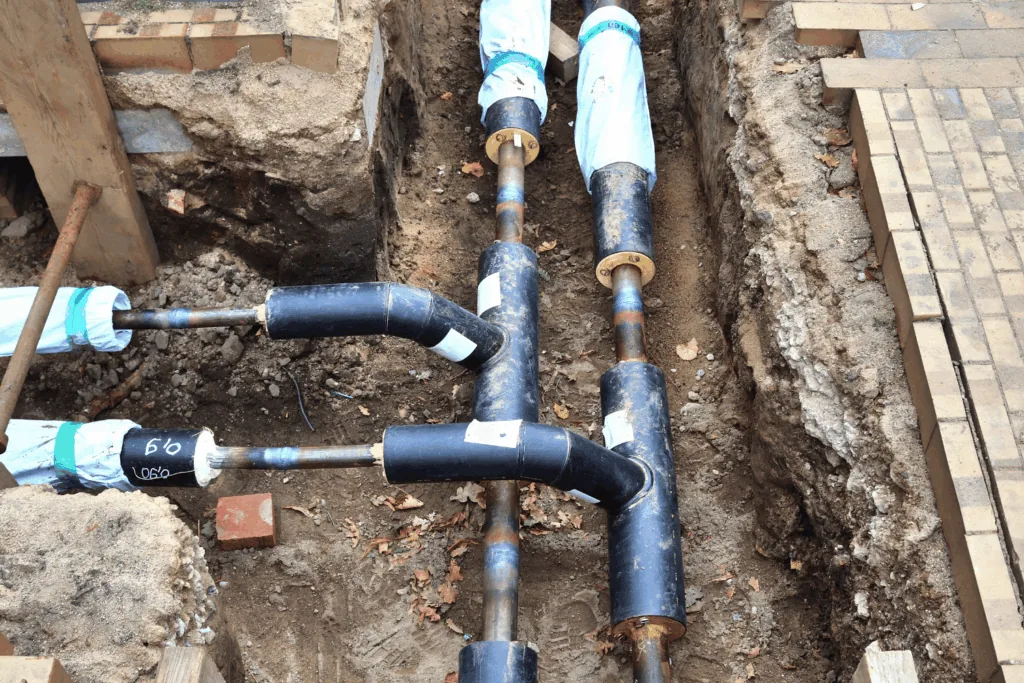
A geothermal system rests on three main components: the loop buried in the ground, the geothermal heat pump and the distribution circuit inside the building. A heat transfer fluid circulates through the ground loop, absorbs heat from the soil and carries it to the heat pump. The pump then raises that thermal energy to a usable temperature and distributes it through radiant floors, radiators or a ventilation network.
How these systems work in detail, including the various types of ground loops and heat pumps, is covered at length in our dedicated article on how a geothermal system works.
The benefits of geothermal heating
Significant energy savings
One of the most convincing arguments for geothermal energy is its exceptional efficiency. For every kilowatt-hour of electricity used to run the heat pump, a geothermal system typically delivers between 3 and 5 kilowatt-hours of heat. That translates into a coefficient of performance (COP) of between 3 and 5.
In concrete terms, heating costs can drop by 40% to 70% compared with a conventional electric system, depending on how the building is configured and how its occupants use it. Over 10 to 15 years, the savings more than offset the initial investment. Hydro-Québec confirms that this type of system can save up to 60% on heating costs compared with a standard electric system.
A clean, long-lasting system
Geothermal heating emits virtually no greenhouse gases in operation. In Quebec, where electricity comes mainly from hydropower, the carbon footprint of such a system is especially low. Choosing geothermal energy is a concrete way to reduce environmental impact while heating efficiently.
Geothermal systems are also known for their remarkable durability. Indoor components such as the heat pump last roughly 20 to 25 years, while the ground loop can last 50 years or more, making this a genuinely long-term investment.
Steady thermal comfort
Unlike combustion heating systems, which produce noticeable temperature swings, geothermal energy delivers gentle, even heat. Distribution often runs through radiant floors, spreading warmth uniformly across every room and at every height.
Occupants enjoy better comfort as a result, without the cold spots near windows or the occasional overheating seen with other systems. In summer, the same equipment can provide quiet, natural cooling, adding further to overall comfort in the building.
Added value for the building
Installing a geothermal system is a lasting improvement that raises a building’s value on the real estate market. Prospective buyers pay increasing attention to operating costs and to the environmental footprint of a property, and a building equipped with a geothermal system stands out favourably from the competition.
Certain environmental certifications, such as LEED and BOMA BESt, also take building energy performance into account. Geothermal energy can help earn those recognitions, opening the door to additional advantages for managers of commercial and institutional buildings.

The limits to know before you commit
A high upfront investment
The main barrier to adopting geothermal energy remains the installation cost. Depending on the size of the building, the type of system chosen and the nature of the site, costs can vary considerably. For a single-family home, the investment is generally estimated at between $20,000 and $40,000, and sometimes more.
That figure needs to be put in perspective. The annual savings on energy bills, combined with the grant programs available in Quebec, often bring the payback point within 8 to 12 years. Beyond that horizon, the system essentially runs at a profit.
Site constraints
Geothermal energy does not suit every site equally. The area available, the nature of the soil and the presence of bedrock or groundwater all influence the type of system to install and the costs that go with it. A feasibility study by qualified professionals is therefore essential before any project.
In dense urban settings where space is tight, deep vertical boreholes can be the answer, though at a higher cost than horizontal loops. A geothermal specialist can weigh the available options against the specific characteristics of each site.
Which type of geothermal system should you choose?
Horizontal closed-loop system
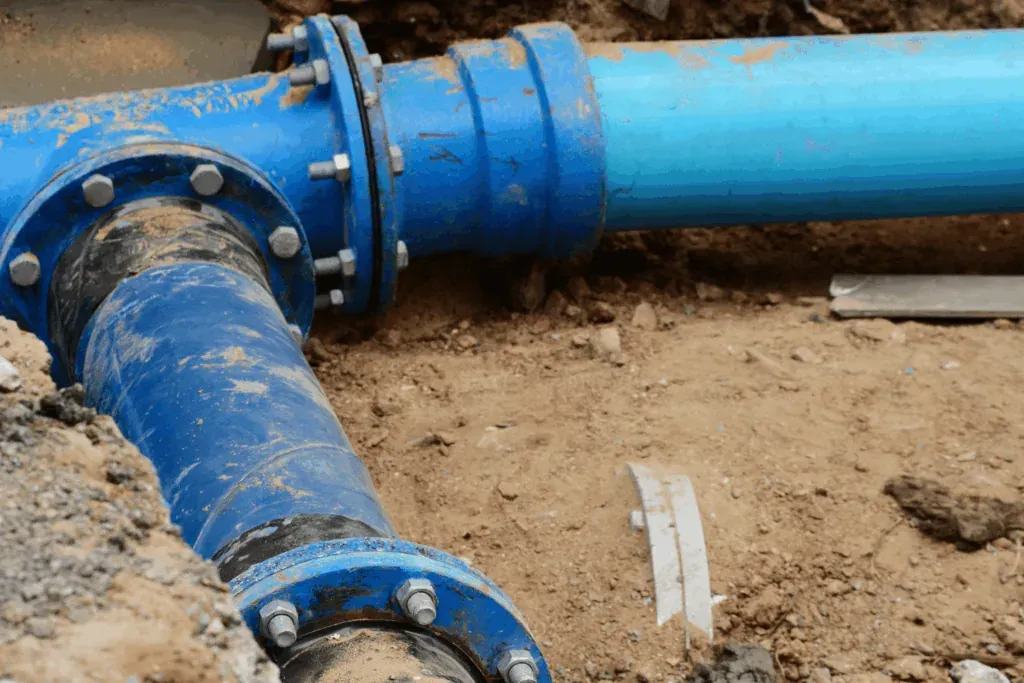
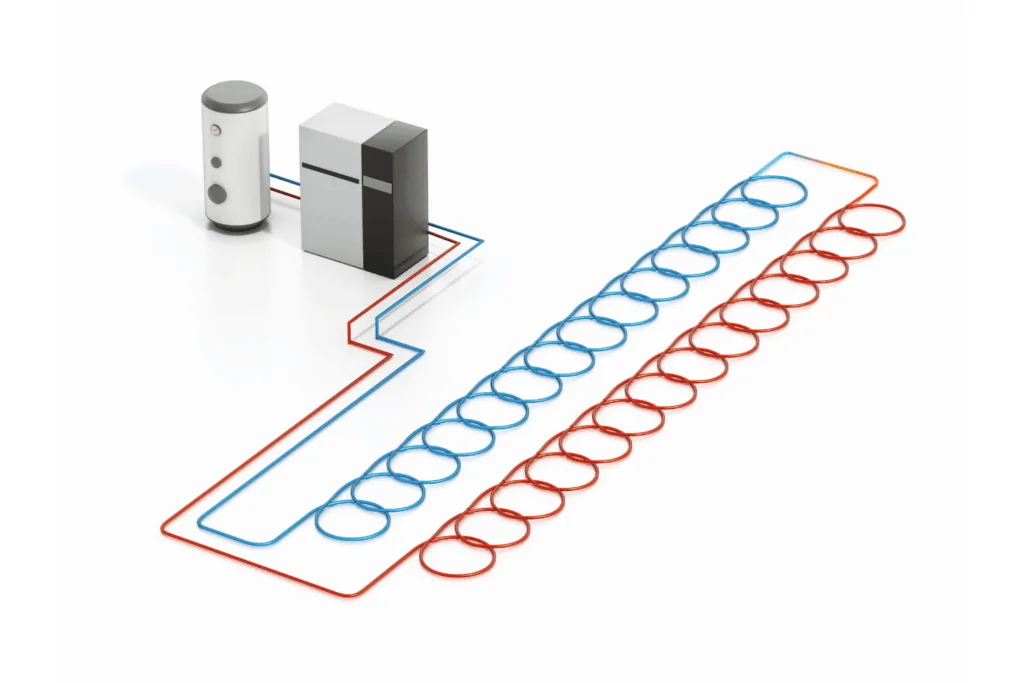
The horizontal closed loop is generally the most affordable to install. The pipes are laid horizontally in trenches dug roughly 1.5 to 2 metres deep. This type of system suits properties with enough land, such as suburban or rural homes.
Its main drawback is the surface area required, which can be substantial depending on system capacity. As a rule of thumb, plan for a ground area two to three times the building’s living space.
Vertical closed-loop system
When ground space is limited, the vertical closed loop becomes the preferred solution. Boreholes are drilled vertically to depths of 50 to 150 metres, depending on the needs of the building. The loop is then inserted into those boreholes and connected to the heat pump.
This type of system costs more to install because of the drilling, but it has the advantage of requiring very little surface area. It is especially well suited to commercial, institutional or residential projects in urban settings.
Open-loop system
An open-loop system uses groundwater directly as its thermal energy source. Water is pumped from a well, its heat is extracted by the heat pump, and it is then discharged into a second well or a nearby watercourse.
This type of system offers very high efficiency where hydrogeological conditions are favourable. It is subject to strict groundwater regulations, however, and it cannot be used everywhere in Quebec. A thorough site analysis is essential before considering this option.
Geothermal heating in Quebec: context and grants
A climate that justifies the investment
Quebec offers climate conditions that make geothermal energy a particularly sound choice. Harsh winters mean high, sustained heating demand, which maximizes the return on a geothermal system. The longer a building has to be heated, the larger the annual savings.
Access to abundant, relatively inexpensive electricity in Quebec is another major asset. A geothermal heat pump runs on electricity, and the stable price of Quebec hydropower shields owners from swings in fossil fuel markets.
The financial incentive programs available
Several grant programs are available in Quebec to make geothermal energy easier to adopt. Hydro-Québec, the provincial government and some municipalities offer financial incentives that can significantly reduce installation costs. These programs change regularly, so it is worth consulting official sources for the most current information.
The LogisVert program, administered by Hydro-Québec, provides financial assistance for the purchase and installation of residential geothermal systems. Our article on the grants available for geothermal energy in Quebec reviews every accessible program in detail, along with eligibility criteria and the steps to follow to claim them.
Conclusion
Geothermal heating is far more than a simple alternative to conventional systems. It is a durable, cost-effective and clean investment that fits the climate and energy realities of Quebec. The upfront investment may look substantial, but long-term savings, stable operating costs and the available grant programs make it a serious option to weigh.
Whether you own a single-family home, manage a commercial building or are responsible for an institutional facility, geothermal energy deserves serious consideration. A qualified professional can analyze your specific situation and recommend the solution best matched to your needs and your site.
Frequently asked questions (FAQ)
Is geothermal heating suited to Quebec’s climate?
Yes. Geothermal heating is particularly well suited to the Quebec climate. Unlike air-source heat pumps, which lose efficiency in very cold weather, a geothermal system draws its heat from the ground, where the temperature stays between 7 °C and 12 °C year-round. Quebec’s harsh winters therefore have no effect on system performance, which makes geothermal a reliable solution in every season.
How much does it cost to install a geothermal system?
Installation costs vary with the type of system, the floor area of the building and the characteristics of the site. For a single-family home, the budget generally falls between $20,000 and $40,000. That amount can be reduced through the grant programs available in Quebec. The payback point is usually reached in 8 to 12 years, after which the annual savings are a net gain.
How long does a geothermal heating system last?
Geothermal systems are known for their long service life. The heat pump, the main component inside the building, has an estimated life of 20 to 25 years. The ground loop can last 50 years or more when properly installed. This is equipment you plan for over several decades.
Can geothermal energy be used for cooling as well?
Absolutely. Most geothermal systems are reversible and can provide cooling in summer. The process is simply reversed: heat is drawn from the indoor air and released into the ground, which then acts as a heat sink. Geothermal cooling is remarkably quiet and efficient, without the visual or acoustic drawbacks of conventional air conditioners.
 Further reading