In Quebec, efficient and sustainable heating solutions are essential to getting through harsh winters. Geothermal energy stands out as a high-performance way to lower energy costs and improve comfort in buildings. Here is how a geothermal system actually works.
The principle behind geothermal energy
What is geothermal energy?
Geothermal energy is a heating and cooling technology that uses the thermal energy naturally stored in the ground. Unlike conventional systems, it does not produce heat: it moves heat from one place to another.
That heat transfer principle delivers very high energy efficiency. In practice, a geothermal system can produce three to four times more energy than it consumes in electricity.
In a setting like Quebec, where energy costs and environmental concerns are front and centre, geothermal energy is a strategic solution for residential, commercial and institutional buildings. To get a fuller picture of geothermal energy and its benefits, it helps to look closely at how it works.
Where does heat in the ground come from?
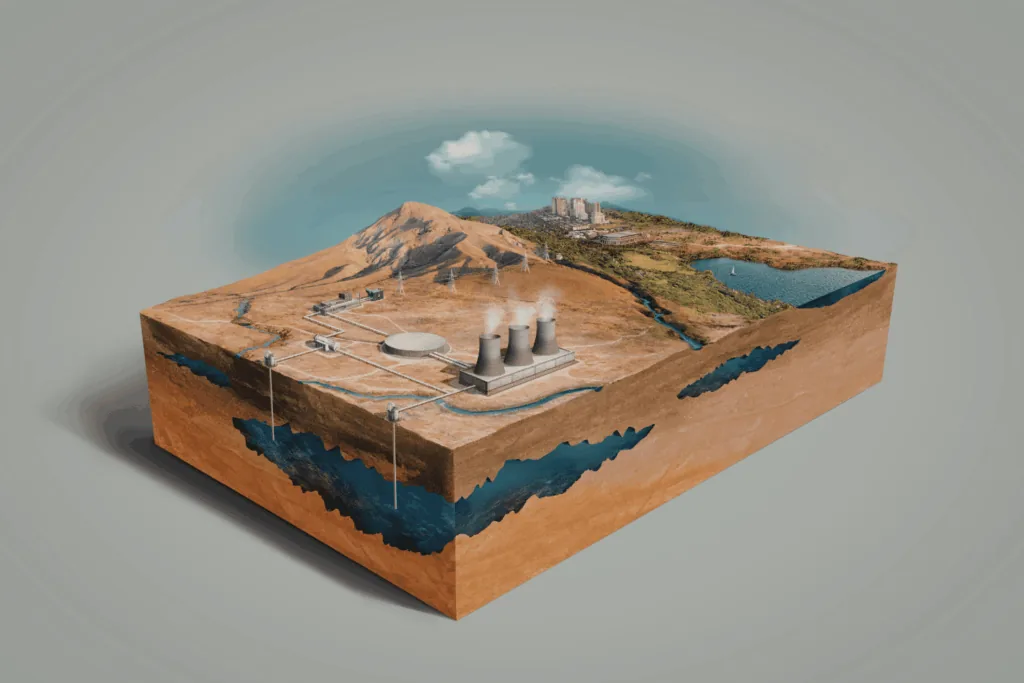
Heat in the ground comes from a mix of stored solar energy and heat from inside the Earth. Every day, the sun warms the surface of the planet, and part of that energy is stored in the upper layers of soil.
Added to this is heat rising slowly from the Earth’s core toward the surface. Together, the two sources create a constant thermal reserve that can be tapped.
Even when the outdoor temperature drops to -20 °C or -30 °C, the ground stays above freezing. That is what makes geothermal energy so reliable in winter.
Why is the temperature underground so stable?
The ground acts as a natural thermal buffer. The deeper you go, the smaller the temperature swings become.
In Quebec, from 3 to 5 metres down, the temperature settles between 5 and 10 °C. That consistency is essential, because it lets geothermal systems run steadily all year long.
This stability is one of the main advantages geothermal energy holds over systems that depend on outdoor air, such as conventional heat pumps.
The components of a geothermal system
The geothermal heat pump
The heat pump is the engine of the system. It turns low-grade heat into heat warm enough to be useful for space heating.
It runs on a four-stage thermodynamic cycle: evaporation, compression, condensation and expansion. This cycle raises the temperature of the refrigerant.
As Natural Resources Canada explains, the geothermal heat pump uses that thermodynamic cycle to move heat efficiently from the ground into the building.
The process is extremely efficient. For every 1 kWh of electricity consumed, the heat pump can produce up to 4 kWh of heat.
The collector network (ground loop)
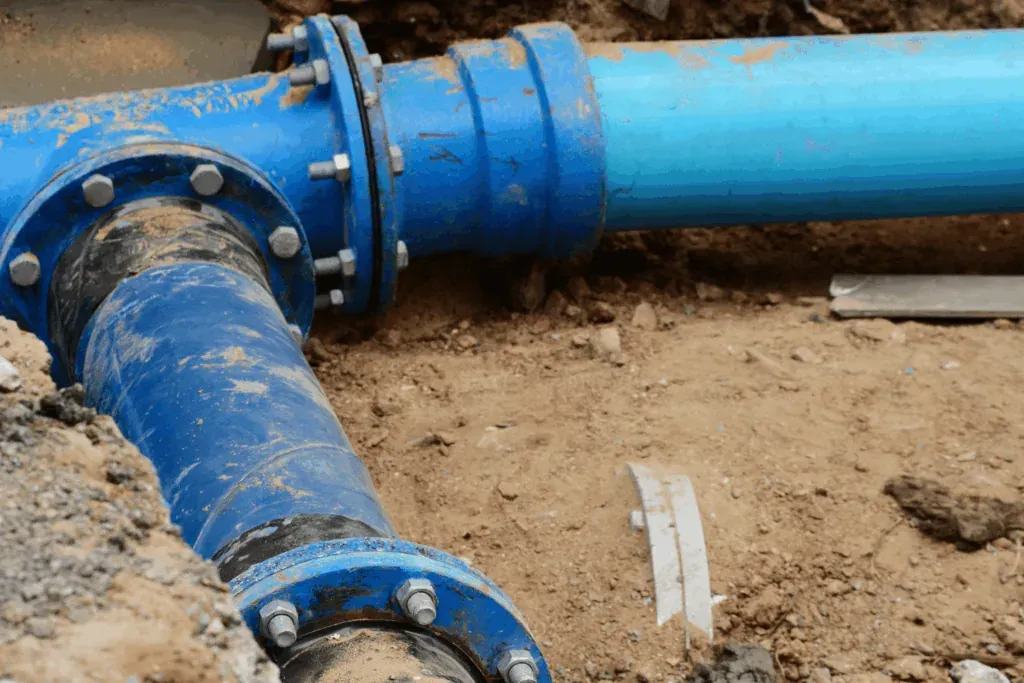
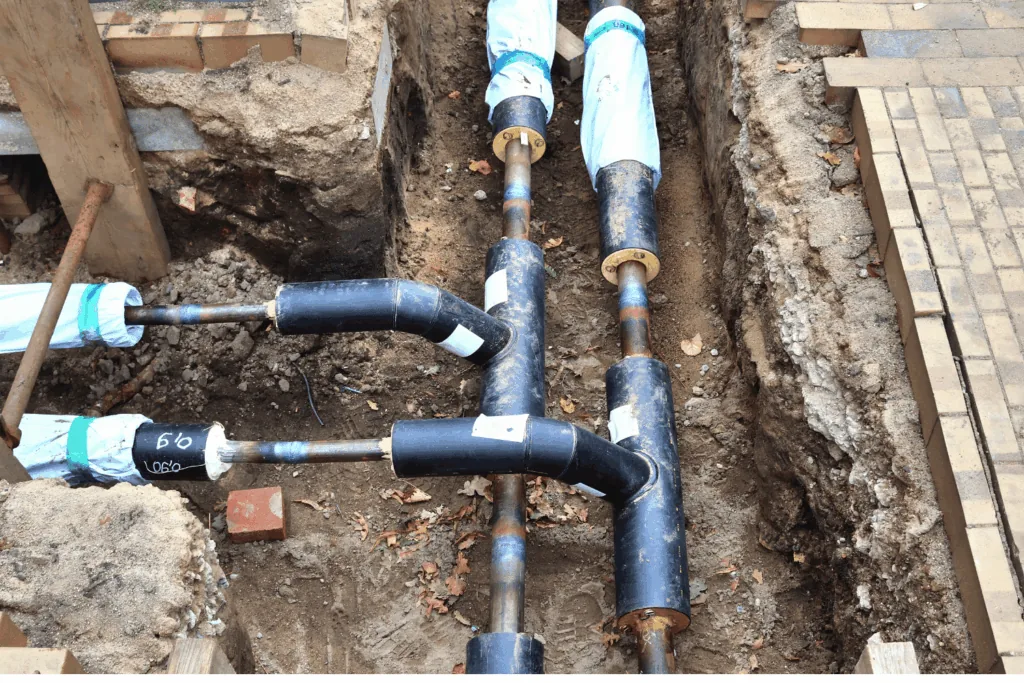
The collector network is made up of polyethylene pipe buried in the ground. These pipes form a closed loop through which the heat transfer fluid circulates.
The length and layout of the collectors vary with the energy needs of the building. The higher the demand, the larger the network has to be.
A well-designed installation delivers optimal performance for decades.
The heat transfer fluid
The heat transfer fluid is central to the exchange. It circulates continuously through the ground loop and absorbs heat from the soil.
This fluid is usually water mixed with antifreeze, a composition that lets it perform well even at low temperatures.
Its constant circulation ensures a stable, continuous heat exchange.
The distribution system (radiant floor, forced air and more)
Once heat has been produced, it has to be distributed through the building. The distribution method has a direct effect on both comfort and efficiency.
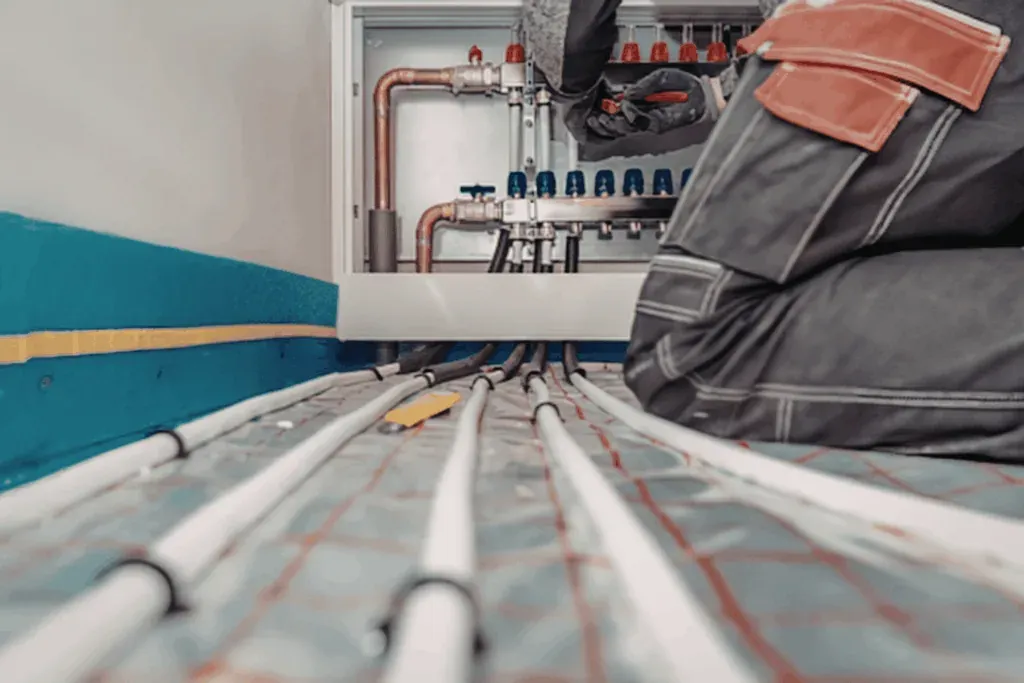
Radiant floor heating is often considered the best option because it spreads heat evenly. Forced-air systems are also used, particularly in existing buildings.
A good distribution system gets the most out of geothermal energy.
The different types of geothermal systems
Horizontal systems
A horizontal system is installed at shallow depth. It generally costs less to install, but it requires a large enough lot.
It is often used for single-family homes in rural or suburban areas.
Vertical systems
A vertical system relies on deep boreholes. It costs more to install, but it takes up far less space.
This type of system is particularly well suited to urban settings and commercial buildings. It delivers stable performance whatever the outdoor conditions.
Surface water systems
This approach involves submerging the collectors in a body of water. The heat capacity of water makes for excellent thermal exchange.
It does, however, call for specific conditions and an environmental assessment beforehand.
Which type should you choose in Quebec?
The choice of system depends on several factors: lot size, geological constraints, budget and energy targets.
In Quebec, vertical systems are often preferred for their reliability. Every project should still be analyzed on its own terms to maximize performance.
How it works, step by step
Step 1: capturing heat from the ground
The heat transfer fluid circulates continuously through the buried collectors and absorbs the heat naturally present in the ground. Even when outdoor temperatures are very low, the ground holds enough thermal energy to be worth tapping.
The process relies on a constant exchange between the fluid and the soil. The larger the collection area, the more effective that exchange. This is why sizing the collector network correctly is essential to optimal system performance.
Step 2: transfer to the heat pump
Once warmed, the heat transfer fluid is carried to the heat pump inside the building. At this stage, the captured heat is still at low temperature.
The heat pump extracts that energy and passes it to a refrigerant. The transfer takes place through a heat exchanger, which recovers as much heat as possible with no significant loss.
Step 3: amplifying the heat
The refrigerant, now carrying that heat, enters a compressor. Raising its pressure raises its temperature substantially.
This turns heat that started out low-grade into heat warm enough to meet the heating needs of the building. It is the step that makes geothermal energy so effective, because it maximizes the energy recovered.
Step 4: distribution through the building
The heat produced is then distributed through the building’s heating system: a radiant floor, radiators or forced air.
Distribution is gradual and even, which improves thermal comfort. Unlike conventional systems, the heat stays constant, with no abrupt temperature swings.
Running in cooling mode
In summer, a geothermal system can run in reverse. It captures heat inside the building and transfers it into the ground, which then acts as a heat sink.
This cools spaces effectively while using less energy than a conventional air conditioning system. The reversal also helps rebalance ground temperature, which improves overall system performance over the long term.
Why geothermal energy performs well in Quebec
Favourable climate conditions
The Quebec climate, with its long, cold winters, makes high-performance heating solutions essential.
Geothermal energy is a reliable answer, one that keeps working even during extreme cold.
Hydro-Québec notes that geothermal energy is a high-performance solution for heating and cooling in the Quebec climate. Learn more.
Thermal stability of Quebec soils
Quebec soils retain heat exceptionally well. That characteristic delivers consistent performance regardless of temperature swings at the surface.
Thanks to this thermal inertia, geothermal systems draw on a stable energy source all year long. Unlike systems that depend on outdoor air, they are not exposed to extreme seasonal fluctuations.
The stability improves not only energy efficiency but also equipment life, since components operate under steadier, less demanding conditions.
Long-term energy savings
Geothermal energy reduces energy costs significantly. Savings can reach 30% to 60% depending on the building, its insulation and its baseline consumption.
Beyond lowering heating and cooling bills, it protects against future increases in energy prices. That makes it especially attractive at a time when energy costs keep climbing.
Over the long term, these savings more than offset the upfront installation cost. Several financial assistance programs and the grants available for geothermal projects can also reduce the initial investment.
Benefits and limitations of a geothermal system
The main benefits
Geothermal energy is a durable, efficient and environmentally sound solution. It cuts greenhouse gas (GHG) emissions and improves the energy performance of buildings.
It also delivers superior comfort, thanks to a stable, uniform temperature.
The limitations to consider
The upfront cost remains the main obstacle. Some projects also call for in-depth technical studies.
These constraints are usually offset by the long-term savings.
Conclusion
A geothermal system works on a simple principle, yet performs exceptionally well. By tapping the stable heat of the ground, it heats and cools a building efficiently and sustainably.
In Quebec, this technology is a forward-looking way to improve energy efficiency and shrink the environmental footprint of buildings.
Frequently asked questions (FAQ)
Does geothermal energy work in winter in Quebec?
Yes. It works perfectly even at very low temperatures because it draws on heat stored in the ground.
How deep does a geothermal system go?
Horizontal systems are shallow, while vertical systems can reach more than 100 metres.
What is the service life of a geothermal system?
The collectors can last more than 50 years, and the heat pump roughly 20 to 25 years.
Is installing a geothermal system cost-effective?
Yes. It pays for itself through long-term energy savings.
 Further reading